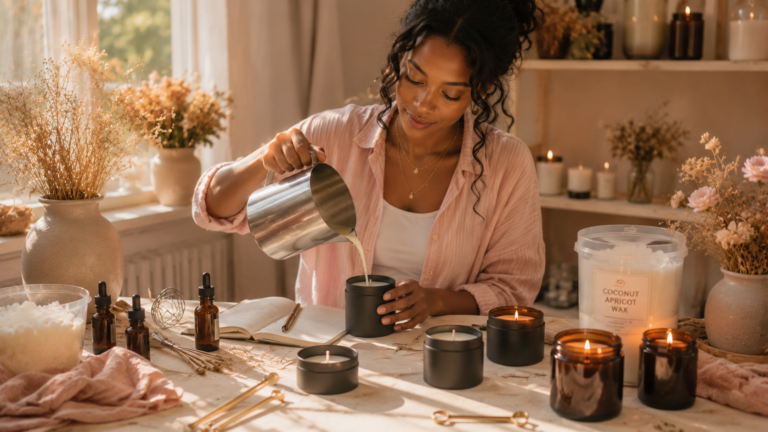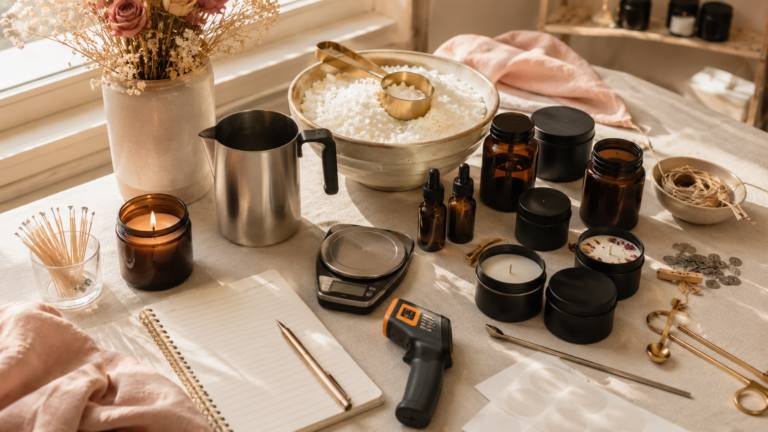
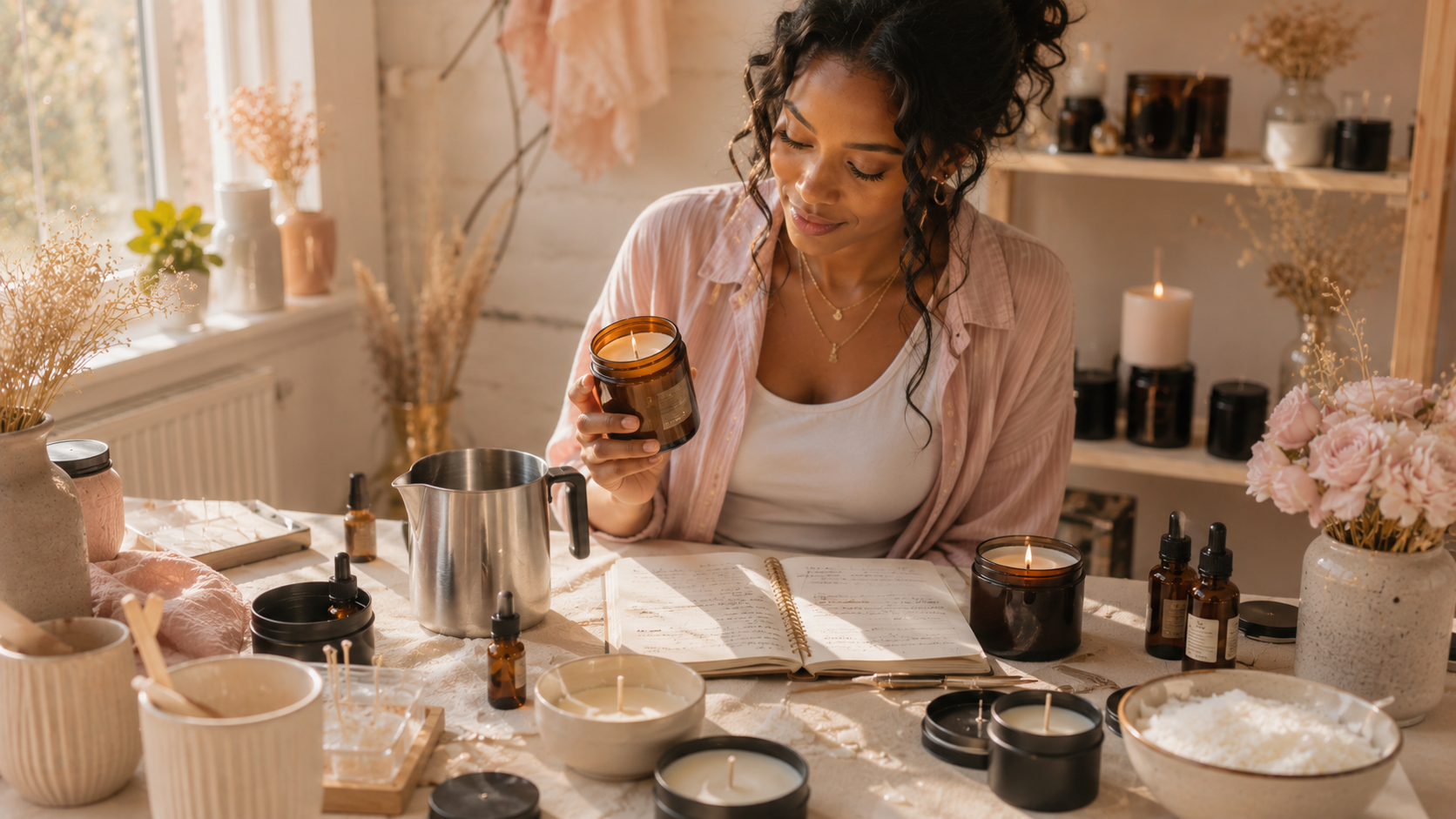
Starting your candle-making journey is incredibly exciting, but like any hands-on craft, there is a natural learning curve. Most beginners make a few missteps in the beginning—and honestly, that is just part of the process.
Candle making isn’t about rigid perfection; it is an art form mastered through patience, gentle experimentation, and paying attention to small details over time. If you are just getting started, being aware of these common candle making mistakes will save you time, ingredients, and frustration.
1. Pouring Wax at the Wrong Temperature
Temperature controls almost everything in the candle-making process. Pouring your wax into jars when it is too hot or too cold can deeply impact your final product.
- Pouring too hot: Can cause the wax to shrink drastically as it cools, leading to deep sinkholes around the wick or cracked tops.
- Pouring too cold: Can cause premature frosting, uneven textures, or poor adhesion to the sides of your glass jars.
The Fix: Never guess! Always use a reliable digital thermometer to monitor your melting, fragrance-mixing, and pouring temperatures based on the specific wax type you are using.
2. Adding Too Much Fragrance Oil (Overloading)
It is a natural instinct to think: “If I add more fragrance oil, my candle will smell twice as strong!” However, overloading your wax can actually cause the exact opposite reaction.
Exceeding the recommended fragrance percentage often leads to:
- A weak scent throw: The excess oil clogs the wick, preventing it from burning efficiently to release the aroma.
- Sweating: Pools of unused fragrance oil leaching out and sitting on top of the cured wax.
- Safety hazards: Heavy smoke, sparking, or uneven, dangerous flames.
Finding the proper fragrance balance takes a little math and a lot of testing, but staying within a 6% to 10% fragrance load is generally the sweet spot for a clean, beautiful burn.
3. Rushing the Curing Process
One of the hardest parts of candle making is the waiting game. It is incredibly tempting to light your creation the moment it solidifies, but a candle needs time to “cure.”
During the curing phase, the fragrance oil molecules completely bind and distribute evenly within the wax structure.
- Soy wax generally requires a full 10 to 14 days to cure for maximum scent throw.
- Coconut apricot blends typically need about 7 to 14 days.
Sometimes the best sensory results simply come from giving your wax the quiet time it needs to fully settle.
4. Choosing the Wrong Candle Wick Size
Wicks are the engine of your candle. Selecting the wrong size or style is one of the most common reasons for candle making troubleshooting.
| If the Wick is Too Small (Under-wicked) | If the Wick is Too Large (Over-wicked) |
| The flame won’t melt the wax all the way to the edges of the jar, causing tunneling down the center. | The flame will burn too hot, creating excessive flickering, heavy black soot, and a dangerously deep melt pool. |
| You’ll waste a ring of unmelted wax around the glass. | The candle will burn down way too fast, destroying your premium fragrance oils. |
Even the most experienced candle artisans spend hours testing different wick combinations with new jars, so don’t be discouraged if your first few burns require a minor adjustment.
5. Expecting Perfection Right Away
This might be the biggest mistake of all. Many aspiring crafters give up too quickly because their very first batch doesn’t look like it belongs on a luxury boutique shelf.
Remind yourself that candle making is an experiential ritual:
- Every single pour teaches you something new about your ingredients.
- Every failed test burn helps you understand your materials deeper.
- The minor imperfections are proof that a real pair of hands intentionally crafted it.
Final Thoughts: Enjoying the Rhythms of the Craft
At its core, candle making should feel calming, creative, and therapeutic. It is entirely okay to learn slowly, test bizarre scent combinations, swap your waxes, and make mistakes along the way. That is exactly how you develop your unique style and understand your craft inside and out.
No artisan starts out knowing everything. Get started, stay curious, and allow yourself room to grow without the heavy weight of pressure. Sometimes, the mistakes are what make the journey meaningful in the first place.
— FemiLux Candles ✨
Have you run into any of these mishaps while making candles at home? Which step of the process do you find requires the most patience? Let’s chat in the comments below!